
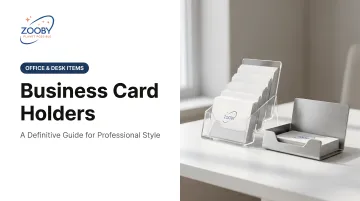
A business card holder is a small accessory with an outsized effect on how professionals are perceived. This guide covers everything you need to know: the types available, what materials signal about you, how to spot quality construction, and how companies use custom branded holders to reinforce identity at scale.
Key Takeaways
- Physical cards are exchanged 27 million times daily in the US; a quality holder ensures yours arrives looking sharp
- The main formats are pocket cases (for active networking) and desk stands (for passive distribution)
- Leather suits most professionals best — metal works well when you want a harder, more structured look
- Quality markers: full card enclosure, one-handed opening, secure clasp, slim profile
- Custom branded holders double as corporate gifts recipients actually keep and team identity tools
Why Business Card Holders Still Matter in a Digital World
The assumption that AirDrop and LinkedIn QR codes have replaced physical cards doesn't hold up against the numbers. Approximately 27 million business cards are exchanged daily in the US alone, with roughly 10 billion printed each year. Physical card exchange is alive—and the presentation still matters.
Research backs this up. A study from California State Polytechnic University found that a high-quality, novel business card positively affects a buyer's perception of a salesperson's efficacy and trustworthiness—and that positive perception partially transfers to the selling firm itself. The card isn't just contact information. It's a signal—and the holder is what keeps that signal intact.
A card pulled from a quality case arrives without bent corners or smudged ink. The Emily Post Institute puts it plainly: received cards should be placed carefully into "a wallet, date book, or a dedicated card case"—not stuffed into a pocket. That deliberateness is the point. The holder turns a routine exchange into something that looks considered.
Types of Business Card Holders
Business card holders split into two broad categories based on how they're used.
Pocket/personal holders are carried on your person for active networking—meetings, conferences, client visits. Desk and display holders sit stationary at reception areas, office desks, or trade show booths for passive distribution.
Pocket and Personal Holders
Slip cases are the slimmest option—minimal profile, easy to pocket—but they leave card edges partially exposed and hold fewer cards. They suit professionals who carry a small number of premium cards to selective meetings.
Bifold or clamshell cases are the most common format. They open like a book with separate compartments on each side—one for your cards, one for cards you've received. This separation matters at conferences where you're collecting dozens of cards at once. Ideal for frequent networkers.
Rigid purpose-built cases offer full enclosure with a structured frame, interior pockets, and a secure clasp. For professionals who carry their holder in a trouser or jacket pocket daily, this format holds up best—the structured frame keeps cards from bending under pressure.
Wallet hybrids and phone attachments (MagSafe-style cardholders) prioritize convenience over dedicated card protection. They work for carrying one or two cards casually but sacrifice the organizational separation and full protection of a purpose-built case.
Desk and Display Holders
Desktop holders are upright stands that display cards face-out for clients and visitors to take. Common placements include:
- Reception desks and front offices
- Conference room tables
- Trade show booths
- Retail counters
They complement a pocket holder rather than replace it—passive display at a desk, active exchange in person.
Materials: What Your Card Holder Communicates About You
Material choice sends an immediate signal before a word is spoken. Treat it as a deliberate decision.
Leather
Leather is the most recommended material for professional settings—and not all leather is equal. According to Saddleback Leather Co., the hierarchy runs as follows:
| Grade | Quality | What to Expect |
|---|---|---|
| Full-grain | Highest | Retains full hide surface; develops patina; most durable |
| Top-grain | Good | Lightly sanded for uniformity; less water-resistant |
| Genuine leather | Low | Split layer; tends to dry and crack over time |
| Bonded leather | Lowest | Ground scraps mixed with adhesive; wears quickly |
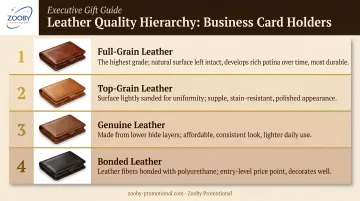
For a business card holder you'll use daily, full-grain or calf leather is the practical choice. The interior lining matters too—suede or velour protects card surfaces from scratches.
Exotic leathers (crocodile, ostrich) exist but can read as ostentatious in conservative professional settings. Classic smooth or pebbled leather travels across dress codes without friction.
Metal
Stainless steel and aluminum cases are durable, structured, and carry a certain status weight. Three practical drawbacks to weigh before buying:
- Heavier than leather
- Sharp corners can snag jacket linings
- High-quality versions cost more than mid-range leather
Vintage metal cases are worth a separate note. Repurposed cigarette cases look distinctive but weren't built for standard business card dimensions, so cards tend to shift loosely inside.
Wood and Alternative Materials
Walnut, maple, and bamboo holders are genuine conversation starters, particularly suited to creative industries, architects, and design professionals. They're artisan in feel without being impractical.
PU/synthetic leather and carbon fiber options offer a lower price point with a tech-forward aesthetic. Synthetic materials don't develop a patina the way natural leather does, and the difference is visible up close—something worth considering if the holder will be handled by clients frequently.
What Makes a Quality Business Card Holder
Material and price vary widely — but these functional markers separate a quality holder from one that fails on the job.
Full Card Protection
A quality holder fully encloses cards on all sides—edges, corners, and face. Slash-pocket designs and open-sided cases leave edges exposed to bending and grime. This is the most basic functional requirement, and it's easy to fail. Verify that the holder accommodates the US standard of 3.5 x 2 inches (88.9 x 50.8 mm).
Capacity and Organization
Match capacity to how you actually network:
- 10–20 cards: Day-to-day meetings and small events
- 25–50 cards: Conferences, trade shows, high-volume networking
Separated compartments—your cards on one side, received cards on the other—prevent the shuffle of trying to hand someone else's card to a new contact.
Construction and Hardware
Inspect these before purchasing:
- Stitching sits tight, even, and flush with no loose threads at corners
- Internal frame is metal, not plastic — holds shape under daily pressure
- Hinge or clasp closes securely without requiring two hands or excessive force
- Lining resists fraying and pilling after months of regular use
- Opens one-handed, so card presentation stays confident and uninterrupted
Size and Profile
A holder that creates a visible bulge in a jacket breast pocket undermines the entire point. Quality holders are slim enough to sit flat without distorting the silhouette of the outfit—a practical detail that matters more in conservative dress-code environments.
Matching Your Holder to Your Industry and Personal Style
The right holder depends on context.
Conservative fields—law, finance, banking, consulting—call for classic leather in dark, neutral tones. Black, dark brown, and oxblood are reliable choices that project authority without distraction. Metal cases in brushed silver or gunmetal also work well in these settings.
Tech, creative, and entrepreneurial fields allow more material variety. Wood cases, distinctive finishes, or bold interior colors fit naturally in environments where personality in accessories is expected rather than tolerated.
A few style principles apply regardless of industry:
- Classic exterior colors (black, dark brown, whiskey brown) work across virtually every dress code
- Contrasting interior linings or stitching add personality without compromising formality
- Match your holder to your other leather accessories—belt, shoes, portfolio—for a pulled-together look
Once you've settled on style, budget shapes the rest of your decision. Here's what each price tier realistically delivers:
| Tier | Range | What You Get |
|---|---|---|
| Budget | $5–$20 | Functional; synthetic materials; basic construction |
| Mid-range | $40–$120 | Quality leather or metal; solid build; good daily use |
| Premium | $150+ | Luxury leather or precious metal; heirloom-level craftsmanship |
For most professionals, the mid-range sweet spot covers daily use without compromise. A $60–$80 leather case will outlast several budget options and hold its shape through years of pocket or bag use.
Custom Branded Business Card Holders for Teams and Corporate Gifting
When a sales team, event staff, or client-facing department uses holders imprinted with the company logo, every card exchange becomes a brand touchpoint. The holder serves a dual purpose: functional tool and brand statement in the same moment.
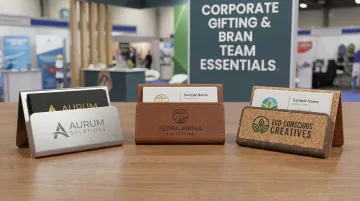
PPAI research found that 83% of consumers recalled at least one brand from a promotional product unaided, and nine in ten recalled branding when prompted. A daily-use item like a branded card holder earns that recall naturally — used repeatedly, in front of new contacts, in professional contexts.
What to Look for When Sourcing Branded Holders
- Consistent material quality across units: A 50-piece order should look identical. Request samples before committing to volume.
- Clean imprint area: Laser engraving on metal, debossing on leather, and foil stamping are the decoration methods that hold up to daily handling. Screen printing is an option for flat surfaces on synthetic materials.
- Appropriate minimum order quantities: Typical MOQs for promotional card holders range from 25 to 300 units depending on the product and customization method.
Zooby Promotional's catalog spans several material categories:
- Metal: Monte Christo and Dawlings Curved for executive settings
- Faux leather: Soho Magnetic Card Case for a polished, professional look
- Plastic and synthetic: Budget-friendly options for high-volume distribution
- Wood: Beech Wood Business Card Holder suited to creative industry teams
Production typically runs 3–5 working days after order confirmation.
For organizations managing ongoing distribution across multiple locations or departments, Zooby's free Company Store program handles fulfillment without requiring the client to hold inventory—a practical solution for consistent brand presentation at scale. Reach out to sales@zooby-promotional.com to discuss options.
Frequently Asked Questions
What makes a good business card holder?
Three things: full enclosure on all sides (no exposed card edges), a secure clasp that opens confidently with one hand, and construction quality that reflects your professional standards. Material and price range both vary widely — these three qualities should not.
Do people still use business card holders?
Yes. With 27 million cards exchanged daily in the US, physical card exchange remains a standard professional ritual—particularly in face-to-face industries. A holder ensures the card arrives in the same condition it was printed.
What is the best material for a business card holder?
Full-grain or calf leather is the top choice for most professionals—durable, comfortable to handle, and appropriate across industries. Metal is a strong alternative for those who prefer a structured, heavier case with a more formal aesthetic.
How many cards should a business card holder hold?
A capacity of 10–20 cards covers most everyday professional situations. For conferences, trade shows, or high-volume networking events, a 25–50 card capacity is more practical.
Can business card holders be customized with a company logo?
Yes. Metal holders support laser engraving; leather and synthetic options support debossing, foil stamping, and screen printing. These methods hold up to daily use and produce clean, professional results even on large orders.
What is the difference between a business card holder and a business card case?
The terms are largely interchangeable. "Case" typically refers to a rigid pocket holder carried on your person, while "holder" may also describe desk display stands. Context usually clarifies which format is meant.