Introduction
Picture this: you've spent weeks sourcing items, coordinating vendors, and assembling hundreds of swag bags. The event ends. And half of them are sitting abandoned on chairs or stuffed under hotel room beds.
It's one of the more demoralizing moments in event planning — and it's almost entirely preventable.
Studies suggest that over 80% of people keep promotional products they actually find useful — but "useful" is doing a lot of work in that sentence. The difference between a bag that gets left behind and one that travels home and sparks a "where did you get that?" conversation comes down to a few deliberate decisions: what's inside, how it's branded, and whether it was chosen with that specific audience in mind.
This guide covers the corporate swag bag ideas that actually get kept — organized by category, sorted by audience type, and paired with practical branding and presentation advice. The goal: a bag people want to take home.
Key Takeaways
- Quality beats quantity — 3 to 5 well-chosen items consistently outperform a bag stuffed with cheap fillers
- The most reliable categories: branded drinkware, tech accessories, wellness items, eco-friendly picks, and gourmet consumables
- Match items to your event type — conference, retreat, or client dinner — and swag lands far better
- Subtle branding keeps items usable; oversized logos turn gifts into billboards no one wants
- Invest in packaging: a cohesive, well-presented bag signals care before anyone sees what's inside
Why Corporate Swag Bags Still Make an Impression
Well-executed swag bags aren't a relic — they're a branding opportunity that most events still underuse.
Cheap, logo-plastered giveaways have earned their bad reputation. But high-quality branded items tell a different story. According to PPAI's 2021 research, 75.4% of people kept a promotional product because it was useful — and 48.7% kept items for longer than five years. The bar for "impressive" has simply shifted upward.
In-person events are also firmly back. The CEIR Total Index reached 95.6 in Q4 2024, up 6% year over year, with 37% of completed events in 2024 surpassing pre-pandemic attendance levels. More attendees means more opportunities to make a lasting impression — or waste a budget on items that end up in the recycling bin by Tuesday.
Done well, swag bags extend the event experience past checkout. A quality insulated tumbler sitting on someone's desk three months later keeps your brand visible far more reliably than a digital ad they scrolled past.
The challenge is execution. Attendees now expect functional, thoughtful items — and they're quick to filter out anything that misses. The sections below cover what actually works, from product selection to packaging.
Top Corporate Swag Bag Ideas by Category
The most effective swag bags draw from a few proven product categories. The approach that works: one or two standout items per category, not an attempt to cover everything at once.
Branded Drinkware
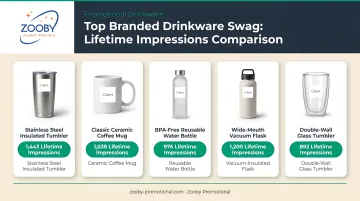
Drinkware is the anchor "hero" item in most successful corporate bags, and for good reason. A quality tumbler travels between home, office, and gym. It gets used daily.
According to ASI's 2023 Ad Impressions Study, drinkware generates 3,162 lifetime impressions, with 63% of consumers keeping it for at least one year — strong numbers compared to most promotional categories.
The key is quality. Recipients can tell the difference between a $3 stadium cup and a vacuum-insulated tumbler that keeps coffee hot for hours. Premium-tier drinkware — think BruMate, Thermos, or Asobu — signals that the brand invested in the experience. Zooby Promotional carries options across this full range, from economy ceramic mugs to BruMate Era 30oz tumblers, with laser engraving and full-color printing available for each.
Best picks for corporate bags:
- Vacuum-insulated tumblers (20–40 oz) with laser-engraved logo
- Ceramic mugs paired with artisan coffee or tea packets
- Premium stainless steel water bottles with bamboo or cork lids
Tech Accessories
The most useful tech swag solves problems attendees actually face during an event. A full-day conference drains phone batteries. Laptop cameras are always on. Desk clutter is universal.
Power banks remain one of the most kept tech giveaways — ASI data shows 51% of recipients kept a power bank for at least two years. Wireless chargers, webcam covers, and compact Bluetooth speakers round out the category well. Webcam covers, in particular, cost almost nothing (as low as $0.67 per unit in volume orders) but carry a privacy-conscious message that resonates with professional audiences.
One practical item beats three gimmicky gadgets. Pick whichever single tech accessory your specific audience is most likely to use — and make it a good one.
Wellness and Self-Care
Wellness items signal that the brand sees recipients as people, not just professionals — and that distinction lands differently than another logoed pen.
This category performs especially well for employee appreciation events and corporate retreats. Strong picks include aromatherapy candles, quality lip balm made with organic ingredients, mineral bath soaks, and branded sleep masks. Employer interest in wellbeing is at an all-time high — 93% of employers planned to maintain or expand wellbeing programs in 2025, according to Business Group on Health — which makes wellness-themed swag feel aligned with broader organizational values rather than random.
Keep items travel-friendly and unisex.
Eco-Friendly and Sustainable Picks
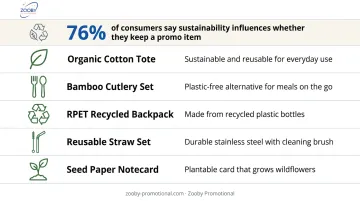
Sustainable swag functions as a brand values statement, not just a product category. The data is clear: PPAI research found that 76% of consumers said sustainability influences whether they keep or use a promotional item, and 89% of Gen Z consumers said sustainability is important to them.
Recommended items:
- Organic cotton totes with GOTS certification (sturdy enough to replace a plastic bag)
- Bamboo cutlery sets with carrying pouches
- RPET recycled material backpacks or laptop sleeves
- Reusable stainless steel or silicone straw sets
- Seed paper bookmarks or plantable notecards
Zooby's catalog includes over 8,000 sustainable products — from GOTS-certified totes to fully recycled RPET bags — which means sourcing eco-friendly items at volume doesn't require compromising on quality or customization.
Gourmet Food and Consumables
Consumables solve a specific problem: storage guilt. Recipients enjoy them and they're gone — no closet clutter, no junk drawer purgatory.
Smart options for any bag:
- Local or artisan coffee roasts
- Small-batch chocolates or curated truffle boxes
- Craft cocktail mixers with recipe cards
- Gourmet popcorn tins
- Premium snack packs
Partnering with a regional food maker adds an authentic dimension to the bag's story. It's a clear signal of intentionality that generic giveaways simply can't replicate. Zooby sources branded chocolate products and confectionery items suitable for corporate gifting, including custom-molded chocolates and premium gift boxes.
Branded Apparel Done Right
Apparel only earns its place in a swag bag when the quality clears one simple test: would someone wear this if the logo weren't on it?
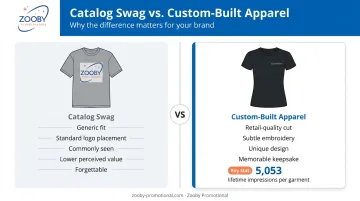
If the answer is no, skip it. If yes — a genuinely soft t-shirt with a retail-level cut, a quality beanie with subtle embroidery, or a cozy blanket for a retreat audience — it becomes one of the most visible and long-lasting items in the bag. ASI research shows t-shirts generate 5,053 lifetime impressions on average, making quality apparel one of the highest-ROI swag categories when executed correctly.
This is where custom manufacturing makes a real difference. Rather than pulling a generic polo from a standard catalog, working with a partner like Zooby Promotional — which offers end-to-end custom product development and global manufacturing to exact specifications — allows brands to create apparel attendees haven't seen before.
That distinction between "catalog swag" and "custom-built keepsake" is immediately noticeable.
How to Match Swag to Your Audience and Event Type
One-size swag rarely fits all. The most impactful bags are built around who's receiving them and what the event context demands.
Conference and Trade Show Attendees
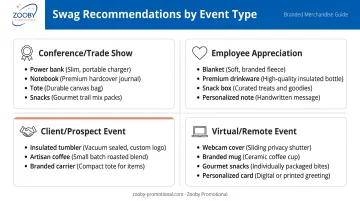
Conference swag should solve day-of problems. Attendees are on their feet, carrying materials, draining phone batteries, and navigating a packed schedule.
Prioritize:
- Portable power banks (addresses the #1 conference pain point)
- Quality notebooks or padfolios
- Sturdy branded totes that hold session materials all day
- Compact snacks for energy between sessions
Keep everything carry-on-friendly. Many attendees are traveling, and a heavy or awkward item gets left at the hotel.
Employee Appreciation and Internal Events
Internal gifting is a chance to signal genuine care, not just brand visibility. Employees can tell the difference between a thoughtful recognition gift and a "leftover conference bag" repackaged.
Lean into comfort and personalization:
- Cozy blankets or soft branded apparel
- Premium drinkware employees will actually use
- Curated snack boxes or wellness items
- A handwritten or name-specific note
That last detail matters. A personalized note or name-specific customization converts a generic bag into a recognition moment that feels individual.
Client and Prospect Events
Client swag should feel elevated and intentional — quality here reflects the professionalism of the relationship it represents.
A strong client kit: one premium item (insulated tumbler or quality tech accessory) + one consumable (artisan coffee, chocolates) + a tasteful branded carrier. The packaging matters as much as the contents at this level — a beautifully assembled kit mirrors the professionalism of the relationship it represents.
Virtual and Remote Event Swag Kits
Pre-shipped kits create a shared experience when attendees aren't in the same room. Items that work well at a screen: webcam covers, branded mugs with coffee or tea, desk plants or succulents, gourmet snacks, and a personalized card.
Critical logistics note: boxes must arrive before the virtual event, not after. Zooby Promotional's Company Store platform supports on-demand, direct-to-address fulfillment. Kits ship individually to distributed attendee locations, with no bulk warehousing or manual coordination required.
Branding and Presentation Tips That Make Your Bag Stand Out
Keep the Logo Subtle and Placement Intentional
The most effective branded swag uses restraint. One "hero" piece in the bag should carry your branding prominently — a laser-engraved tumbler, embroidered beanie, or embossed notebook cover. Everything else can be unbranded or minimally marked.
Quality placement techniques that work:
- Laser engraving on metal drinkware — permanent finish that reads premium, not promotional
- Tone-on-tone embroidery on apparel — feels retail-quality rather than giveaway-grade
- Debossing on leather or faux-leather goods
- Small woven labels on blankets or apparel
Plastering a giant, full-color logo on every item in the bag tells a different story — one about insecurity rather than intentionality. Restraint is what separates brands people remember from bags people abandon at the hotel.
Let Packaging Tell the Story First
The moment someone picks up the bag is when the experience begins. Custom tissue paper, branded ribbon, a cohesive color palette, and a handwritten or printed card transform a random collection of products into a curated, branded experience.
A themed bag concept — "Recharge," "Cozy Night In," "Ready to Work" — makes the whole thing feel intentional. Attendees notice, photograph it, and share it — and that organic social moment tends to reach audiences no paid placement can touch.
Think About Logistics Before Finalizing Items
Creative decisions and practical realities need to align. Before you finalize your item list, run through this checklist:
- Will it fit in a carry-on? (If not, it may get abandoned)
- Will it melt in a warm conference hall? (Keep chocolate away from July outdoor events)
- Is it too heavy to carry around all day?
- Does it require assembly or explanation?
- Will it arrive on time? (Standard production at Zooby Promotional runs 3–5 working days; 1- and 2-day rush options are available for qualifying items)
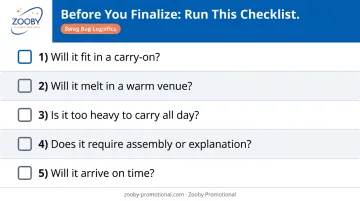
Items that create logistical headaches for the recipient undermine the goodwill you're trying to build.
Common Swag Bag Mistakes to Avoid
Most swag bag failures follow the same predictable patterns. Spotting them early saves budget and prevents the bag from landing in the nearest trash can.
Packing cheap fillers instead of useful items. A bag stuffed with flimsy pens, stress balls, and plastic trinkets signals corner-cutting, not generosity. PPAI's 2025 research found that 62% of consumers rejected promotional products because of poor material or build quality, and 68% kept items specifically because they felt premium. One quality item with a clear use case consistently outperforms five forgettable fillers.
Over-branding every item. When every product in the bag carries an oversized logo, the bag stops feeling like a gift and starts feeling like a walking advertisement. Recipients aren't volunteering for that role — and most won't use items that make them feel like a billboard.
Ignoring audience demographics. A tech-focused conference crowd wants different items than a wellness retreat group. PPAI's same research found that 37% of recipients discarded promotional items because they already had too many similar ones — evidence that generic, undifferentiated swag is a widespread problem, not a rare oversight.
The fix: build the bag around the audience first, select items second, then brand them.
Conclusion
The difference between a swag bag that gets used and one that gets tossed comes down to intention. The right items for the right audience, presented in a way that makes the recipient feel considered rather than marketed to, is what separates memorable from forgettable.
Before finalizing your next swag bag concept, run it through three questions:
- Will people actually use this?
- Does the branding enhance rather than overwhelm the item?
- Does the overall package feel cohesive and intentional?
If the answer to any of those is "probably not," swap the item out.
For organizations looking to go beyond off-the-shelf options, Zooby Promotional handles everything from initial concept through delivery. Whether you need fully custom-manufactured pieces, sustainable sourcing, premium drinkware, or end-to-end kit fulfillment, they work at any scale — from 25-unit VIP kits to thousands of conference bags. Reach out to the Zooby team at sales@zooby-promotional.com to start building your next swag bag.
Frequently Asked Questions
What should I put in a corporate swag bag?
Start with one useful branded item (drinkware or a tech accessory), one consumable (artisan snack or coffee), and a sturdy carry bag. Three to five well-chosen items beat a bag packed with cheap fillers — prioritize quality and relevance to your specific audience over covering every category.
Are swag bags still relevant?
Yes — when done well. High-quality, functional swag drives real brand recall and event engagement. The bad reputation belongs to cheap, logo-heavy giveaways, not to thoughtfully curated bags that people actually want to take home.
What are some unique corporate gift ideas?
Locally sourced artisan food, custom apparel, desk succulents, cocktail kits with recipe cards, or premium tech accessories attendees wouldn't buy for themselves. Specific and considered always beats generic catalog items.
How many items should go in a corporate swag bag?
Three to five items. Fewer, better-quality pieces give attendees something worth keeping — and often land within the same budget as a bag stuffed with forgettable fillers.
What is a reasonable budget for a corporate swag bag?
Budgets vary by event type and audience. General attendee bags typically fall in the $15–$50 per person range; client or VIP kits can exceed $100. When budgets are tight, industry data suggests cutting quantity before sacrificing quality — 60% of buyers reduce quantity rather than compromise on quality or customization when constrained.
How do you brand swag bag items without them looking cheap?
Use subtle placement: small logos, tone-on-tone embroidery, laser engraving on metal, debossing on leather goods. Limit prominent branding to one or two hero items per bag, and let your color palette and packaging carry your brand identity beyond just a logo on every surface.