The wrong answer wastes money and leaves attendees with something they'll abandon in a hotel room. The right answer keeps your brand visible for months — sometimes years — after the event ends. The gap between those two outcomes usually comes down to selection discipline, not spend level.
This guide walks through a practical framework for choosing corporate event gifts that actually work: how to match gifts to event purpose, audience, and budget, with the research to back up each decision.
Key Takeaways
- High-impact gifts are defined by relevance, usability, and quality — not price alone
- Start with event purpose and audience profile before touching a product catalog
- Subtle, well-placed branding outperforms oversized logos in both retention and perceived quality
- Budget 4–6 weeks minimum for custom orders; logistics and lead times matter as much as the gift itself
- A full-service promotional products partner manages sourcing, customization, and fulfillment end-to-end — reducing effort and avoiding costly delays
What Makes a Corporate Event Gift "High-Impact"?
Generic swag gets discarded. A thoughtful gift gets used — and every time it's used, it's working for your brand.
Three markers separate high-impact gifts from forgettable ones:
- Relevance — Does it match what this audience actually values or needs?
- Functional quality — Is it built well enough that recipients reach for it again?
- Brand alignment — Does it reinforce how your company wants to be seen?
All three have to work together. A beautifully made item that's irrelevant to the recipient still ends up in a drawer. A useful item with sloppy branding undermines the impression you're trying to create.
According to PPAI's Product Power 2026 research, 90% of consumers say receiving a promotional product improves their perception of the brand, and 72% associate branded merchandise with positive emotions like pride, belonging, or gratitude. Nearly 65% keep a branded product for six months or longer — meaning a well-chosen gift extends your brand's presence long past the event date.
That reach disappears quickly when quality falls short — PPAI found that poor material or construction turns over 60% of recipients away from a product immediately. Fewer, better items will outperform a large batch of forgettable ones every time.
Main Categories of Corporate Event Gifts
Understanding what's available helps you scope options before applying selection criteria. Corporate event gifts generally fall into five categories — the right one depends on your audience and event goals.
Apparel and Accessories
Branded jackets, polos, performance wear, and hats generate some of the highest lifetime impressions of any gift category. ASI's 2023 Ad Impressions Study found that outerwear generates 7,856 lifetime impressions, with 61% of recipients keeping it for 2+ years and 41% more likely to do business with the brand afterward.
Recipients only wear branded apparel if the quality earns it — premium materials are what separate a jacket someone wears to work from one that sits in a closet.
Tech and Productivity
Power banks, wireless chargers, desk accessories, and USB drives perform well with professional audiences because they solve real daily problems. A branded power bank stays on someone's desk or in their bag indefinitely — 51% of recipients keep power banks for 2+ years, and 40% are more likely to do business after receiving one.
PPAI research also notes that 38% of consumers believe tech accessories make a brand appear modern, making this category especially effective when brand perception is a goal.
Drinkware and Lifestyle
Drinkware is the most consistently retained category across diverse audiences. ASI data shows 63% of recipients keep branded drinkware for 1+ year, generating 3,162 lifetime impressions per item. PPAI adds that 73% of consumers use branded drinkware every day.
Recognized brands — YETI, Stanley, Thermos — significantly elevate perceived value. Lifestyle items like bags (43% kept 2+ years) and blankets round out this category for events with a hospitality or wellness tone.
Custom Awards and Recognition Pieces
Engraved trophies, crystal awards, acrylic plaques, lapel pins, and perpetual awards are built to be displayed, not discarded. This category suits milestone events, employee recognition programs, and VIP gifting where the item itself signals prestige.
Curated Gift Kits
Kits combine multiple items around a theme — onboarding, seasonal, city-specific — for a cohesive, themed impression. Presentation and packaging carry as much weight as the items inside — a well-packaged kit signals care and thought that a single item rarely conveys on its own.
Here's how the top categories compare on the metrics that matter most for event gifting:
| Category | Avg. Lifetime Impressions | % Kept 2+ Years | Business Impact |
|---|---|---|---|
| Apparel & Outerwear | 7,856 | 61% | 41% more likely to do business |
| Tech Accessories | Not reported | 51% (power banks) | 40% more likely to do business |
| Drinkware | 3,162 | 63% kept 1+ year | 73% use daily |
| Bags & Lifestyle | Not reported | 43% | High daily visibility |
| Awards & Recognition | Varies | Display-retained | Prestige signaling |
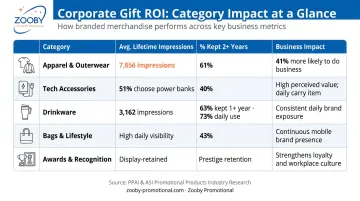
Sources: ASI 2023 Ad Impressions Study; PPAI consumer research.
Key Factors to Consider When Choosing Corporate Event Gifts
The right gift category means nothing without the right selection criteria. These six factors connect your decision to real outcomes — attendee satisfaction, brand recall, and budget efficiency.
Event Type and Purpose
The event's goal should directly dictate gift direction:
| Event Type | Gift Priority |
|---|---|
| Trade show | Portability, brand visibility, broad appeal |
| VIP hospitality | Perceived luxury, personal relevance |
| Employee recognition | Prestige, display value, emotional resonance |
| Client appreciation | Quality, usefulness, brand alignment |
| Conference/seminar | Functional daily-use items |
A gift that works at a trade show — a compact branded tech item, for instance — will feel underwhelming at an executive dinner. Map the gift to the event's purpose before evaluating any specific products.
Audience Profile and Personalization
A field sales team and a C-suite audience need entirely different gifts. Before selecting anything, consider:
- Executives respond to quality and restraint; individual contributors typically value practical utility
- Tech audiences often prioritize gadgets; creative teams respond better to lifestyle or design-forward items
- Age, geography, and work context all shape what actually gets used
Even limited personalization makes a measurable difference. Name engraving, role-specific selection, or industry-relevant themes shift a gift from generic to considered — and recipients notice.
Budget Per Recipient
Budget tiers should reflect relationship level and event scale. A useful industry benchmark: Synchrony/Coresight research found that 25% of U.S. corporate gift buyers spend $75–$100 for individual gifts. For larger events, the IRF's 2026 Industry Outlook reports that per-instance on-site merchandise gifts average $243 in North America.
The better metric is cost-per-impression. A $60 tumbler used daily for a year delivers far more brand exposure than a $150 novelty item that sits unopened. Measure budget in terms of ongoing brand value, not unit cost alone.
Usability and Lasting Value
Items that solve a real daily problem earn ongoing use — everything else gets left on the table or thrown out.
Usefulness is the top reason recipients keep branded products — cited by 2 out of 3 respondents in PPAI research. In an event context where attendees often receive multiple items, functional quality is how you differentiate. Choose the item that earns a place on someone's desk or in their bag over something that's clever but not genuinely useful.
Branding Strategy
Tasteful branding outperforms heavy-handed logos in almost every context. PPAI research found that 44% of recipients prefer subtle branding over large, bold logos — yet 57% say a clear, visible logo helps them remember the company. The balance: visible, not dominant.
Decoration method matters as much as logo size:
- Laser engraving delivers a premium feel on drinkware, leather goods, and executive gifts
- Tone-on-tone embroidery keeps apparel refined without sacrificing brand presence
- Screen print works well on bags and apparel where color is central to the brand story
- Consistent color matching across decoration methods reinforces recognition at every touchpoint
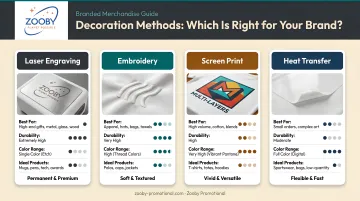
Nearly 70% of consumers say high-quality materials or finishes make a product feel premium — which means decoration quality and material choice are inseparable from branding strategy.
Logistics and Lead Times
Underestimating lead times is where event gifting budgets quietly collapse. Plan with this in mind:
- Standard in-stock items — Production typically runs 3–5 working days; rush options (1–2 days) are available on qualifying items
- Custom-decorated or fully bespoke items — Allow 4–6 weeks minimum to accommodate proofing, production, and shipping
- Overseas-manufactured products — Require significantly longer windows; contact your supplier early in the planning process
ASI has documented that roughly 35% of promotional product orders require turnaround of five days or less — meaning rush requests are common, but they carry real risk. Scale adds another layer: ordering for 500 recipients requires different sourcing, kitting, and distribution logistics than ordering for 50. The earlier you engage a fulfillment partner, the more options you have.
How Zooby Promotional Can Help
Zooby Promotional has spent 20 years helping companies across 40+ US states — from national brands like Microsoft, Chase, and PETCO to universities and nonprofits — source, brand, and deliver merchandise that makes a lasting impression on attendees. The team brings both product depth and hands-on guidance to every engagement, from initial selection through final delivery.
A few things that set them apart:
- Thousands of in-stock products across every major gift category, plus fully custom manufacturing capabilities for custom-built products built to exact specifications — domestic and overseas
- Recognized premium brands in the catalog, including YETI, Stanley, and Thermos, giving clients access to premium brands alongside promotional-grade options
- Free Online Company Stores (Swag Stores) — no setup or maintenance costs, ever. Clients distribute branded merchandise one item at a time without purchasing, managing, or storing inventory. Zooby handles fulfillment and ships directly to individual recipients, making it especially effective for large-scale or recurring events
- Multiple decoration methods — laser engraving, embroidery, screen print, heat transfer, and more — with guidance on which approach best suits each product and brand strategy
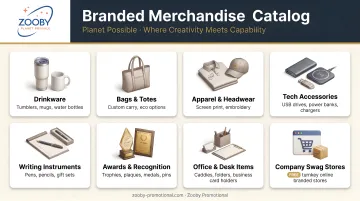
From 50 executive gift kits to conference giveaways for 500 attendees, Zooby manages the logistics end-to-end — so your team can focus on the event, not the fulfillment details.
Ready to plan your next event's gift program? Reach out to the Zooby team at sales@zooby-promotional.com.
Conclusion
High-impact corporate event gifts aren't found by browsing a catalog at the last minute. They're chosen by working backwards — from the event's purpose, the audience's real needs, and the brand values you want to reinforce. The framework in this guide replaces guesswork with a repeatable selection process that works at any budget and any scale.
Gift strategy should evolve as your events and audiences do. Companies that revisit their approach before each event — rather than defaulting to last year's item — see sharper brand recall, better recipient response, and gifts that actually get used. If you're ready to move past the catalog guesswork, Zooby Promotional's team can help you identify the right products, source them efficiently, and get them branded to spec — whether you need 50 units or 5,000.
Frequently Asked Questions
How do I choose high-impact corporate gifts for events?
Start with the event's purpose and audience profile, then apply criteria like usability, brand alignment, and budget. Relevance to the recipient outperforms spend level alone — a well-chosen $50 item beats a generic $150 one.
What is the 3-gift rule for corporate gifting?
The 3-gift rule is a practitioner concept that suggests pairing three complementary items: something to use, something to wear or display, and something consumable or experiential. The goal is a well-rounded gifting experience that appeals to different preferences.
What is the 4-gift rule for corporate gifting?
The 4-gift rule structures a gift around four categories: something useful, something branded, something premium, and something personal. Covering all four ensures the package lands on both practical and emotional levels.
What are the main categories of corporate gifts?
The five main categories are apparel and accessories, tech and productivity, drinkware and lifestyle, custom awards and recognition pieces, and curated gift kits. The right category depends on event type, audience profile, and the relationship you're trying to reinforce.
What are some high-impact corporate gifts to give clients?
Strong options include branded premium drinkware (YETI or Stanley tumblers), custom tech accessories like power banks, engraved recognition pieces, curated gift kits, and premium apparel. Adding personalization — even a name or role-specific selection — sharpens the impact considerably.
How far in advance should I order corporate gifts for an event?
Custom or fully branded items typically require 4–6 weeks for proofing, production, and shipping. In-stock items with standard decoration can turn around faster, but add buffer time for large quantities or multi-item kitting.